Citronliāna
Other climbers
10,00 €
Available

 Enlarge photograph
Berry plants
12,00 €
Sold out
Price includes VAT
This variety is sold out at the moment. Soon you will be able to leave an e-mail address here to be told when it returns.
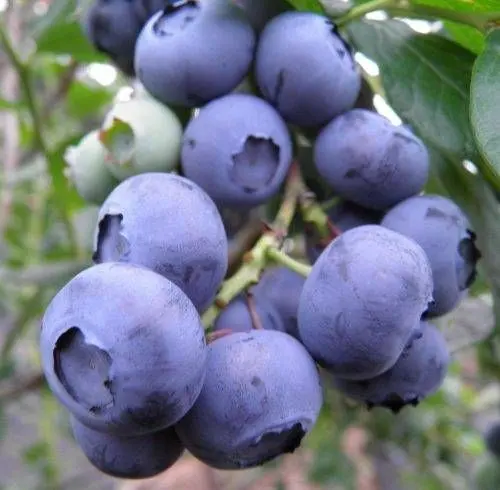
Highbush blueberry -Vacccinium corymbosum
,Chandler,
Height: can reach up to 1.5 m
Growing conditions in Latvia’s climatic zones: can be planted throughout the territory of Latvia. Medium-early variety.
Crown: a vigorous, spreading shrub with upward-pointing branches. Young shoots are green; mature ones are ridged, grey to grey-brown in colour.
Flowers: arranged in clusters, with 8–10 flowers in each cluster; they form both on the previous year’s young shoots and on the side shoots of the shrub’s main branches. One flower is approximately 6–12 mm long. The flowers are white to pale pink, bloom in spring—in May, are resistant to spring frosts, and tolerate temperatures from -2° to -4°C.
Fruit: very large berries (the largest in the world), especially sweet dessert berries, firm, with good keeping quality. They begin to ripen at the beginning of August and produce for four weeks. Up to 4–5 kg can be harvested from one bush.
Foliage: leaves ovate to lanceolate, 3–8 cm long, dark green on the upper side; in autumn the leaves colour from bright yellow to vivid red
Winter hardiness: high, good frost resistance
Growing conditions: choose a sunny place for planting, with nutrient-rich and acidic soil (pH 4.0-5.0) that retains moisture well but does not accumulate excessive wetness. For planting, dig a hole 0.60 m in diameter and 0.35 m deep, and fill it with a peat substrate. Highbush blueberries have a shallow root system; the greatest root density is at a depth of 23 cm, and they spread more in width than in depth. A peat mixture intended for forest plants can be used, for example "LAFLORAS KKS-M1", or it can be planted in pure peat substrate, as it contains all the necessary nutrients, and this is then used to fill the dug hole. The plant should be planted as deep as it grew in the container. Plants are set about one metre apart; their branches spread up to 60-80 cm on each side.
Important to know! Protect from hares and deer, so the planting should be fenced! They gnaw the young shoots.
Care:Fertilising. To obtain abundant harvests, it is recommended to feed the plants with ready-made complete fertilisers intended for plants that love acidic soil. To maintain acidity, it is recommended to mulch the bushes with acidic peat every other autumn. In the following years after planting, highbush blueberries should be provided with moisture, but they do not require any special care.
Pruning and training: in the second half of August, the tips of the nice long shoots should be cut off to encourage branching, because berries form mainly on the previous year’s small side shoots that are 3-8 cm long. In the third year after planting, you should start shaping the bush so that the sun reaches all the branches and it does not become too dense. This is best done in spring, because then you can see which branches were damaged in winter. Ideally, the bush should have 7-8 large main branches.